Italian Brainrot

Origin
Italian Brainrot is a sprawling universe of AI-generated absurd characters with nonsense pseudo-Italian names and robotic Italian text-to-speech voiceovers. It has no single origin post; it coalesced in early 2025 from several creators. Its flagship — and the character widely called the first of the trend — is Tralalero Tralala, a blue shark with three legs wearing blue Nike sneakers. The creation is generally credited to TikTok user @eZburger401 around January 2025 (the account was later banned, reportedly over profane audio). The sound spread fast: on 8 January 2025 user @elchino1246 paired the “tralalero tralala” audio with a shark-pigeon image, and on 13 January 2025 @amoamimandy.1a matched it to the AI shark in Nike shoes — a now-deleted clip that passed 7 million views and became the canonical look.
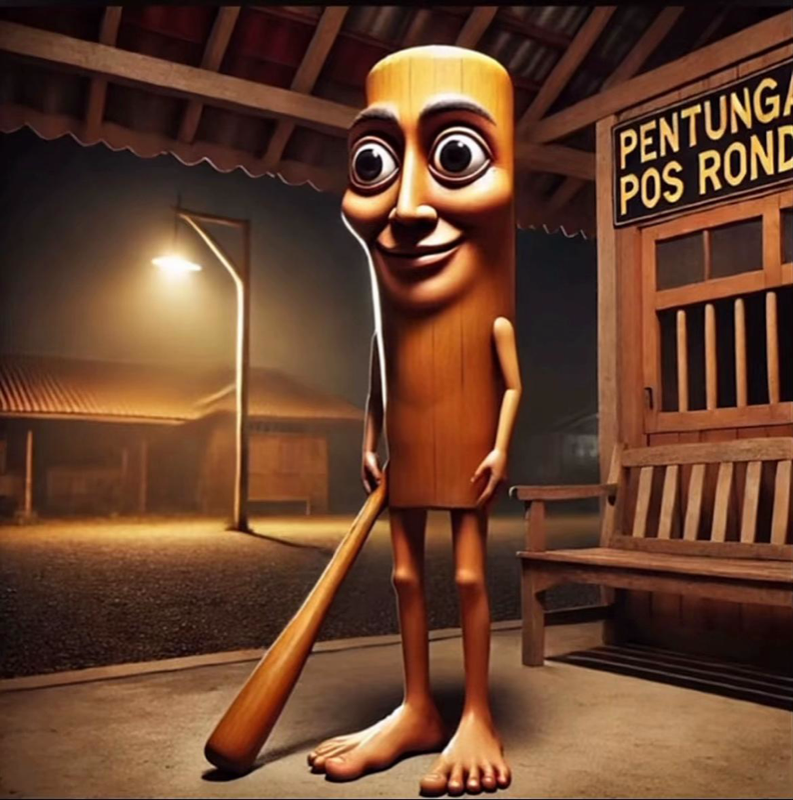
Other pillars followed within weeks: Bombardiro Crocodilo (a crocodile fused with a WWII bomber plane), Brr Brr Patapim (a proboscis-monkey-and-tree hybrid on giant human feet), Lirili Larila (a cactus-elephant in sandals), Bombombini Gusini and the Indonesian import Tung Tung Tung Sahur. By spring 2025 the roster had ballooned to hundreds of entries — among them Chimpanzini Bananini (a chimp-banana), Ballerina Cappuccina (a ballerina with a coffee-cup head) and Cappuccino Assassino — each with its own rhyming chant and invented backstory.
What it means / how it’s used
The names are macaronic gibberish — Italian-sounding rather than Italian — paired with dramatic, absurd mini-monologues. The format is deliberately open: anyone can spin up a new creature with an image generator and a TTS voice, give it a rhyming pseudo-Italian name, and slot it into a shared “universe.” Fans then build lore, alliances, tier lists and “battles” between characters, giving throwaway AI slop a surprising amount of collaborative depth.
How it spread
It became one of the defining brainrot formats of 2025 — algorithm-native, endlessly remixable and impossible to fully catalogue because new characters appear faster than anyone can list them. It jumped from TikTok to YouTube and Reels, spawned explainer and “translation” videos, and was absorbed into the smash Roblox game Steal a Brainrot. It also drew real controversy: several original audios, including those for Tralalero Tralala and Bombardino Crocodilo, contained offensive or blasphemous lyrics, prompting criticism once translations circulated. By mid-2025 the format was mainstream enough that outlets such as WIRED were running explainers on it, and Spotify filled with novelty “brainrot” tracks built from the characters’ chants.
Notable examples & variations
- Character “rosters” and tier lists ranking the creatures by strength.
- School-yard debates over which creature would win.
- Translation videos exposing the sometimes-offensive meaning of the original Italian audio.
- Merch, plushies and Roblox units built on the most popular characters.
Legacy / cultural impact
Italian Brainrot became the emblem of the “AI-slop-as-culture” moment — proof that generative tools plus a shared naming game could manufacture an entire fictional universe overnight, one that adults found baffling and Gen Alpha found irresistible.
Examples & gallery
Frequently asked
What is Tralalero Tralala?
A three-legged blue shark wearing Nike sneakers, paired with a sing-song 'tralalero tralala' voiceover. It is widely cited as the first Italian brainrot character, from around January 2025.
Is Italian Brainrot actually Italian?
Not really. The names are pseudo-Italian nonsense and many creators aren't Italian; the Italian-sounding TTS narration is just part of the absurdist aesthetic.
Are these made with AI?
Yes. The images and many of the voices are AI-generated, and the uncanny, slightly-wrong look is central to the joke.
Why has the trend been criticised?
Some of the original audio clips, including for Tralalero Tralala and Bombardino Crocodilo, contained offensive or blasphemous lyrics, which drew backlash once people translated them.
Sources
Embed this meme
Drop this on your site — it links back here.