Baby Shark
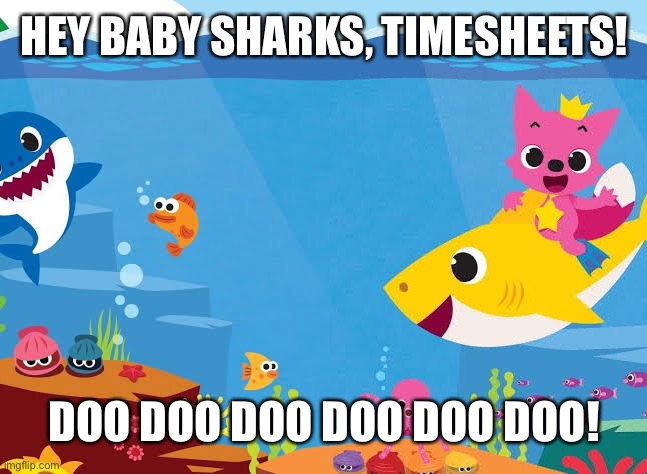
Origin
“Baby Shark” is a children’s chant with folk origins — a camp and playground song, passed around for decades in several languages, with hand movements for each family member: baby shark, mummy shark, daddy shark, grandma shark, grandpa shark, each with a matching size of snapping hands.
The version that conquered the planet was produced by Pinkfong, a South Korean children’s education brand, and uploaded to YouTube on June 17, 2016 as “Baby Shark Dance.” It set the chant to a relentless four-note hook, added two children performing the choreography, and ran for under two minutes.
It took over 245 million views within fifteen months, and then kept going.
What it means / how it’s used
Online, “Baby Shark” functions as shorthand for an inescapable earworm — a song invoked not because anyone likes it but because everyone has been unable to get rid of it.
Its uses:
- Threatening to get the song stuck in someone’s head.
- Describing something relentlessly repetitive.
- Parent humour about children’s media on loop.
- The “doo doo doo” refrain used as pure noise in comments.
It is one of very few songs whose meme status is built almost entirely on irritation, and it is used affectionately by parents and unaffectionately by everyone else.
How it spread
The #BabySharkChallenge — performing the dance on camera — took off in August 2017, particularly in Indonesia, where a video posted by police officers in Mojokerto City on August 11, 2017 helped set it off. It spread across Southeast Asia and then globally.
Its chart performance was genuinely absurd. On January 8, 2019, “Baby Shark” entered the Billboard Hot 100 at number 32, on the strength of 20.8 million streams in a week — a children’s YouTube video charting alongside the year’s biggest pop records.
Then came the records. In November 2020 it passed “Despacito” to become the most-viewed video in YouTube’s history, and on January 13, 2022 it became the first video ever to reach 10 billion views.
An uncomfortable footnote
In July 2019, officials in West Palm Beach, Florida began playing the song on repeat overnight at a waterfront pavilion, explicitly to discourage homeless people from sleeping there.
The tactic — using unbearable audio to make a public space uninhabitable — drew substantial criticism, and it is a documented part of the song’s history. It is also the clearest illustration of the thing the meme is about: “Baby Shark” is genuinely, weaponisably relentless.
Notable examples & variations
- The Pinkfong original, the most-viewed video on YouTube.
- The #BabySharkChallenge dance videos from 2017.
- Remixes across essentially every genre.
- Its use at sporting events, notably by baseball crowds.
- Parent-humour posts about hearing it involuntarily.
Legacy / cultural impact
“Baby Shark” is the most-watched piece of video ever made, which is a genuinely strange fact about human culture. It outperformed every music video, every trailer, and every viral clip in history, on the strength of an audience of toddlers who watch things hundreds of times.
It also demonstrated something the industry has not forgotten: children’s content is the largest and most repeat-viewed category on the platform, and the metrics that determine “most popular” measure repetition as readily as they measure reach.
Examples & gallery
Frequently asked
Where does Baby Shark come from?
It is a folk chant sung at camps and playgrounds for decades. The viral version was produced by the South Korean brand Pinkfong and uploaded to YouTube on June 17, 2016.
Is it really the most-viewed video on YouTube?
Yes. It passed "Despacito" in November 2020 and became the first video ever to reach 10 billion views on January 13, 2022.
Did it chart?
Yes. It entered the Billboard Hot 100 at number 32 on January 8, 2019, on the strength of 20.8 million streams in a single week.
Was it used to deter homeless people?
Yes. In July 2019, officials in West Palm Beach, Florida played it on repeat overnight at a waterfront pavilion to discourage people from sleeping there, which drew substantial criticism.
Sources
Embed this meme
Drop this on your site — it links back here.