The Dress
Origin
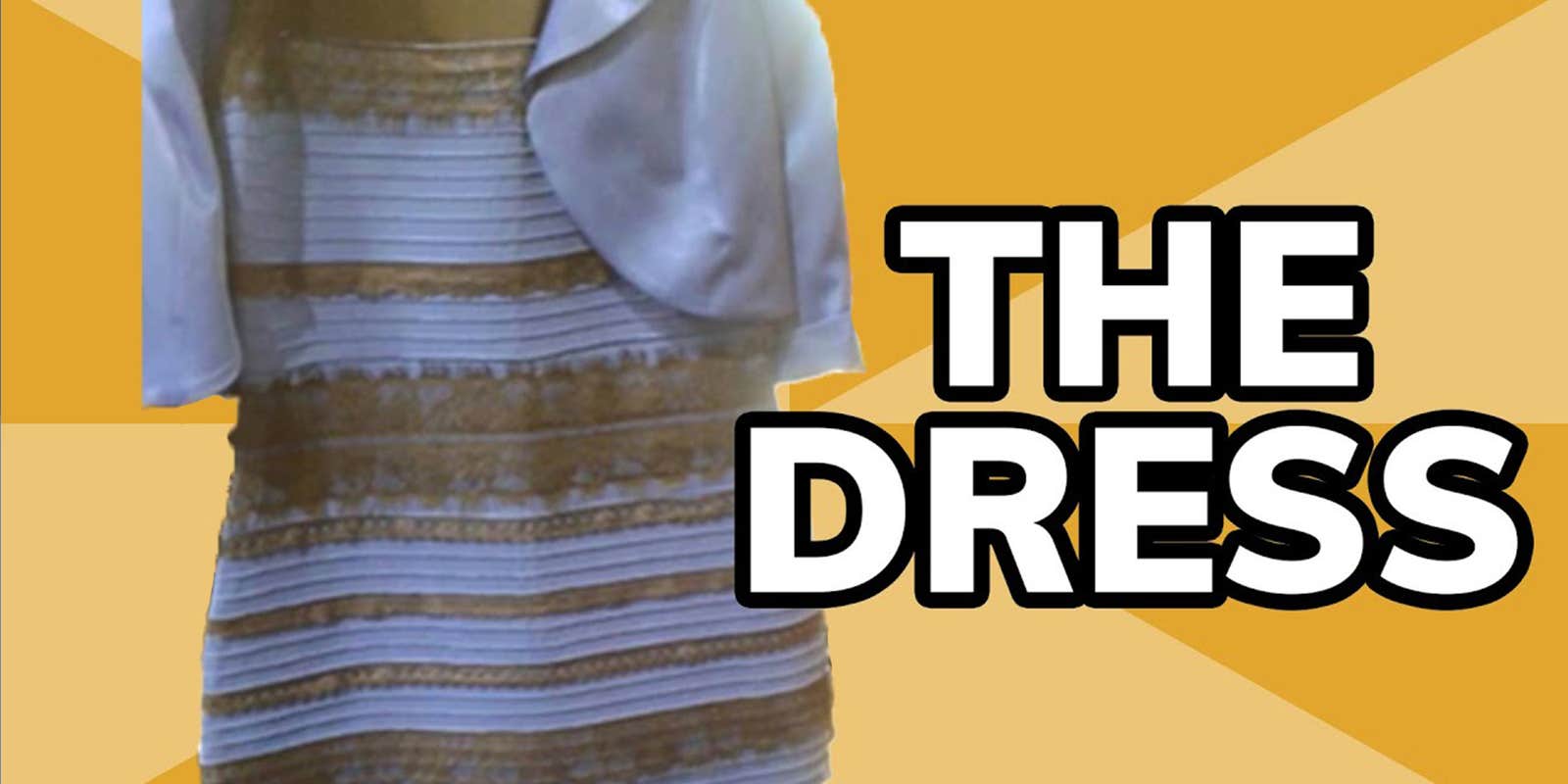
In late February 2015, a photograph of a lace bodycon dress split the internet into two furious camps: those who saw it as blue-and-black and those who saw white-and-gold. The image traced back to Scotland. Cecilia Bleasdale had photographed the dress to show her daughter Grace the outfit she planned to wear to Grace’s wedding on the Isle of Colonsay, and family members immediately disagreed about its color. A wedding singer named Caitlin McNeill, then around 21, saw the picture, and after her own bandmates split over it, she reposted it to her Tumblr on February 25, 2015, asking followers to settle the argument. The post rocketed past a few thousand notes within hours. That evening BuzzFeed community manager Cates Holderness — who had spent much of the day on a separate viral story about two escaped llamas — published “What Colors Are This Dress?”, which drew tens of millions of views within days. The real garment was a roughly 50-pound dress from British retailer Roman Originals, and it was genuinely royal blue and black.
What it means and how it’s used
“The Dress” became instant shorthand for genuinely subjective perception — situations where two people look at the exact same thing and are each certain the other is wrong. Scientists seized on it to explain color constancy, the way the brain silently discounts ambient lighting when judging an object’s true color; because the photo was overexposed and the lighting cues ambiguous, viewers’ brains “corrected” in opposite directions. Informal polls suggested a majority saw white-and-gold. Online, people still invoke “blue and black or white and gold” whenever a harmless disagreement turns weirdly heated.
How it spread
By February 27, 2015, the hashtags #TheDress, #whiteandgold and #blackandblue were among the top trends worldwide. Celebrities piled in within hours — Taylor Swift, Kim Kardashian, Kanye West and many others posted which colors they saw — while outlets from Wired to The Washington Post ran explainers. Neuroscientists including Bevil Conway studied the phenomenon, and a cluster of studies appeared in the journal Current Biology within months, an unusually fast academic response to a meme.
Notable examples and variations
- Roman Originals sold out of the dress and produced a one-off white-and-gold version for the Comic Relief charity telethon.
- The Salvation Army used it in an anti-domestic-violence campaign asking “Why is it so hard to see black and blue?”
- The 2018 “Yanny or Laurel” audio illusion was widely framed as “the dress for your ears.”
Legacy
A decade on, “The Dress” remains the reference point for perceptual illusions and for the way a trivial question can consume the entire internet for 48 hours. Its 2025 ten-year anniversary drew fresh coverage, and it is still taught in psychology courses as a real-world demonstration of color constancy.
Examples & gallery
Frequently asked
What colors was the dress really?
It was genuinely blue and black — a real Roman Originals dress. Many people saw white and gold because the photo was overexposed and the lighting cues ambiguous.
Why did people see the dress differently?
It comes down to color constancy: each person's brain discounts the ambiguous lighting differently, so some correct toward blue-and-black and others toward white-and-gold.
Where did the photo come from?
Scotland. Cecilia Bleasdale photographed it for her daughter's wedding, wedding singer Caitlin McNeill posted it to Tumblr in February 2015, and BuzzFeed turned it into a global sensation.
Is the debate actually settled?
Factually yes — the manufacturer and better-lit photos confirm blue and black — but many people still genuinely perceive white and gold no matter what they are told.
Sources
Embed this meme
Drop this on your site — it links back here.