Ice Bucket Challenge
Origin
The Ice Bucket Challenge grew out of a pre-existing “cold water challenge” format — dump ice water on yourself, post the video, nominate others, donate to a cause of your choosing — that had circulated in various forms for years. What turned it into a phenomenon was attaching it to a single disease.
On June 30, 2014, golfer Chris Kennedy performed the challenge and nominated his cousin Jeanette Senerchia, whose husband Anthony had ALS (amyotrophic lateral sclerosis, or motor neurone disease). That nomination gave the challenge a specific target for the first time.
In July 2014 two men living with ALS took it further. Pat Quinn, in New York, and Pete Frates, a former Boston College baseball captain, pushed the challenge through their own networks. Frates — who by then could no longer speak — had an enormous reach in the sports world, and his participation is what turned a regional fundraiser into a global one.
What it was and how it worked
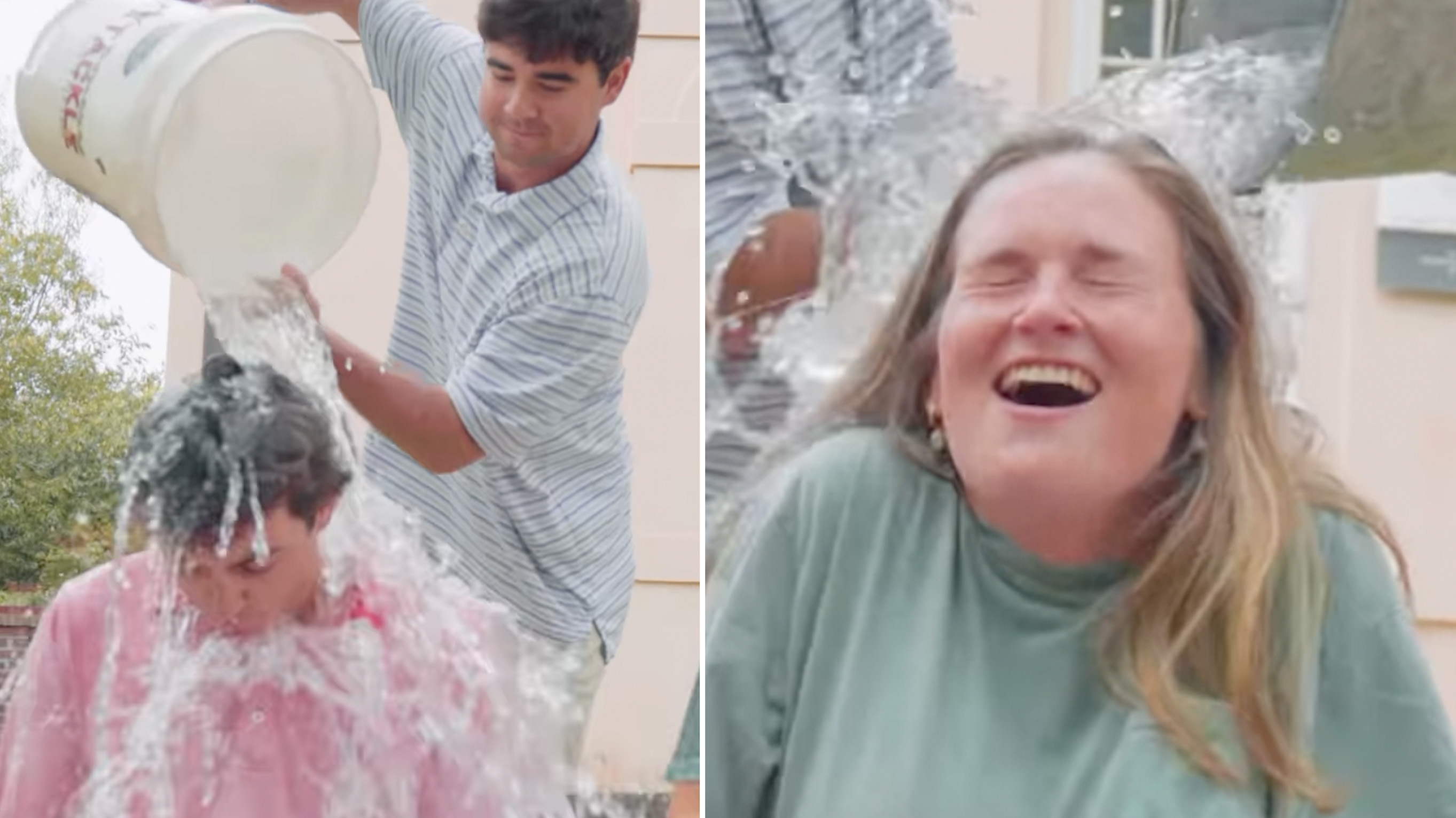
The mechanics were simple and self-propagating: film yourself having a bucket of ice water poured over your head, nominate three people, and give them 24 hours to do the same or donate. Most participants did both.
The format worked because it was cheap, fast, visual, and social. It cost nothing, took a minute, produced a video people wanted to watch, and named specific individuals publicly — creating obligation. Each participant recruited three more.
How it spread
The scale was unprecedented for a charity campaign. Between June and August 2014, more than 2.4 million tagged videos circulated on Facebook alone. Participants included Bill Gates, who built a custom rig to dump the water on himself, and Stephen Hawking, whose children took the plunge on his behalf. President Obama declined the ice water but donated.
The money was extraordinary. The ALS Association received roughly $115 million during the summer of 2014 — against about $2.5 million in the same period the year before — with more than $220 million raised worldwide across ALS organisations, including $26 million in Canada and £7 million in the UK.
The campaign also carried real loss. Corey Griffin, a friend of Frates who helped organise the fundraising, died in a diving accident on August 16, 2014, at the height of the challenge. Pete Frates died on December 9, 2019, aged 34. Pat Quinn died on November 22, 2020, aged 37.
What the money achieved
The challenge drew criticism at the time as “slacktivism” — participation without commitment. The research record complicates that.
In July 2016, the ALS Association announced that funding traced to Ice Bucket Challenge donations had helped identify NEK1 as one of the most common genes contributing to ALS, through the international Project MinE consortium, which received $1 million in challenge funds. The donations also expanded care services and funded multiple further gene discoveries and clinical trials.
Legacy / cultural impact
The Ice Bucket Challenge remains the benchmark against which viral charity campaigns are measured, and the one nobody has replicated. Later attempts to engineer a similar cycle largely failed, because its success depended on things that cannot be manufactured: a simple physical act, a genuine personal story, and named individuals whose participation made refusal awkward.
It is also one of the few internet phenomena of the 2010s with a measurable, documented scientific outcome — a rare case where a meme’s legacy can be pointed to in a genetics paper.
Examples & gallery
Frequently asked
How did the Ice Bucket Challenge start?
It grew from an existing cold-water challenge format. Golfer Chris Kennedy tied it to ALS on June 30, 2014, and Pat Quinn and Pete Frates — both living with ALS — drove it viral in July 2014.
How much money did it raise?
Roughly $115 million went to the ALS Association in the summer of 2014, against about $2.5 million in the same period the previous year, with more than $220 million raised worldwide.
Did it actually lead to anything?
Yes. In July 2016 the ALS Association announced that challenge-funded research through Project MinE had helped identify NEK1 as one of the most common genes contributing to ALS.
What happened to the people behind it?
Corey Griffin, who helped organise the fundraising, died in an accident in August 2014. Pete Frates died in December 2019 aged 34, and Pat Quinn died in November 2020 aged 37.
Sources
Embed this meme
Drop this on your site — it links back here.