Mewing
Origin
‘Mewing’ refers to resting the whole tongue against the roof of the mouth, which proponents claim can, over time, sharpen the jawline and reshape the face. The name comes from two British orthodontists, John Mew and his son Mike Mew, who promote a philosophy they call ‘orthotropics,’ developed by John from the 1970s. The word and the technique spread online largely through Mike Mew’s YouTube videos (the Orthotropics channel, from the early 2010s) and through ‘looksmaxxing’ forums, where mostly young men trade tips for maximizing their attractiveness. In that vocabulary, mewing is filed under ‘softmaxxing’ - the low-effort, non-surgical tweaks - as opposed to ‘hardmaxxing’ such as jaw surgery, and the Mews drew mainstream press attention, including national newspaper features on the family, well before the technique ever reached TikTok.
The medical establishment is skeptical. John Mew was removed from the UK dental register by the General Dental Council in 2017, and Mike Mew later faced his own misconduct case and was struck off. Orthotropics is not recognized by the NHS, the GDC or the British Orthodontic Society, and the dramatic facial-restructuring claims attached to mewing are not supported by mainstream evidence.
What it means and how it is used
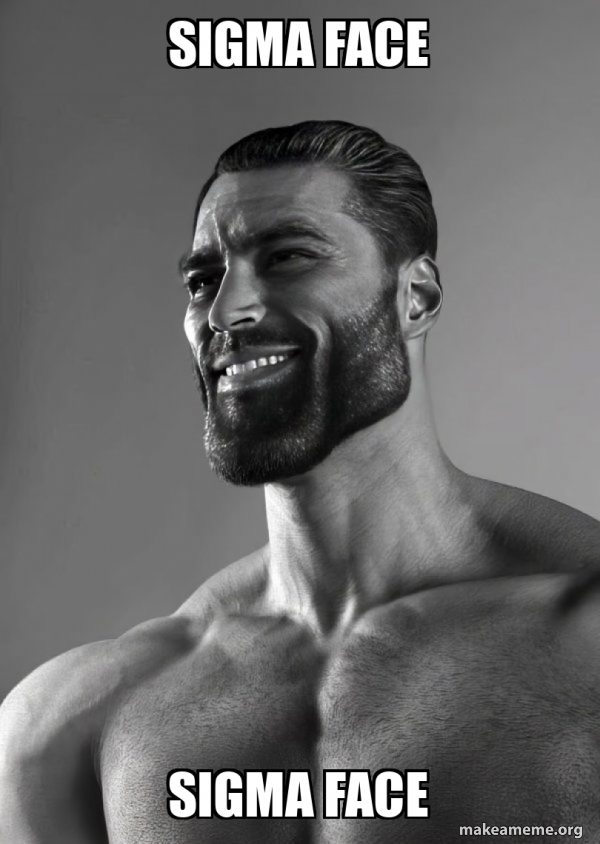
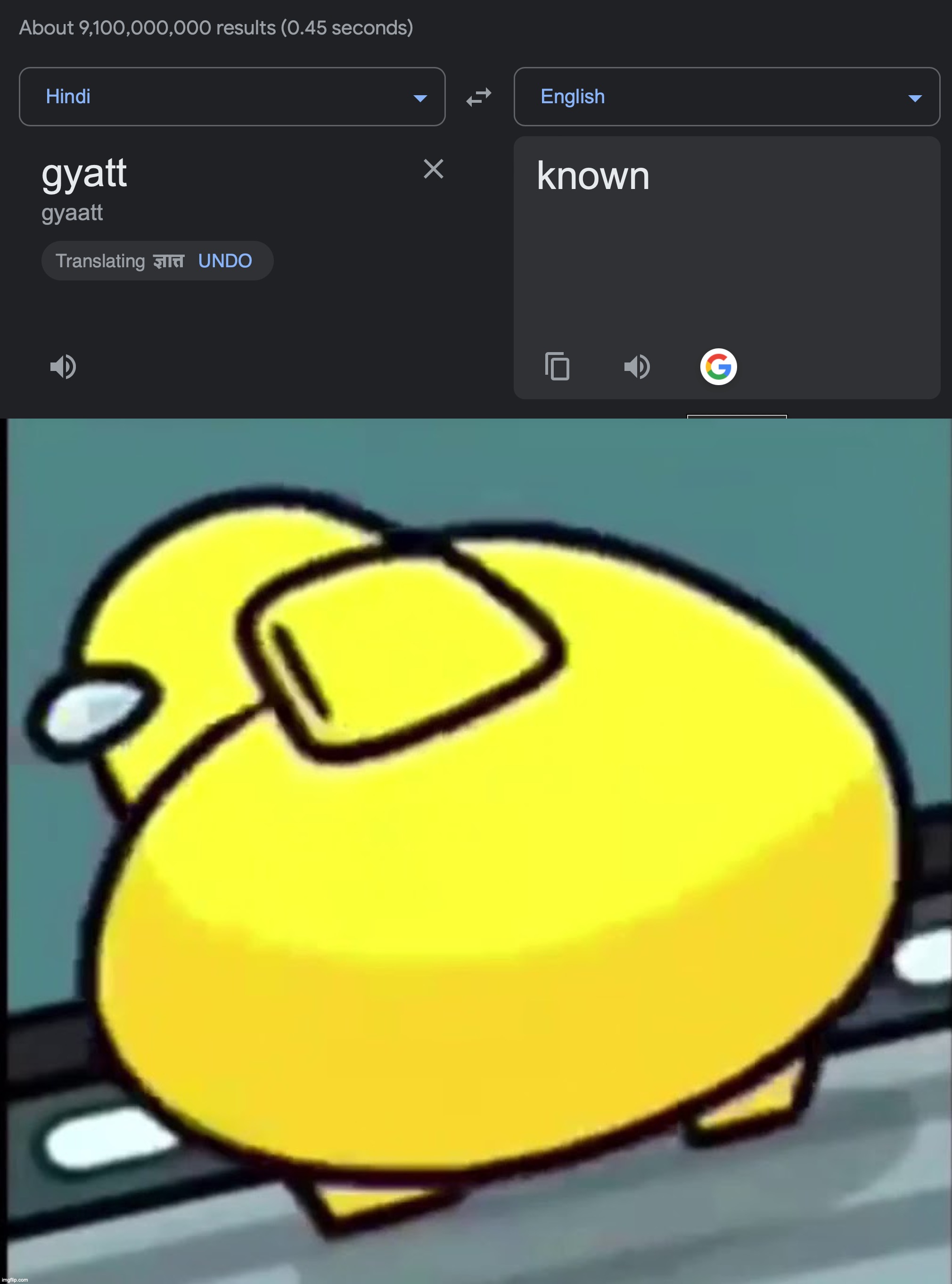
Around 2023 to 2024, mewing detached from the medical debate and became a TikTok gesture and punchline. In its most popular form it is a bit about looking cool and refusing to speak: someone holds up an index finger, keeps a serious, silent expression, and traces a finger along the jawline to signal ‘can’t talk, I’m mewing.’ Gen Alpha students turned this into a running classroom gag, ‘mewing’ instead of answering a teacher, and it slots neatly into the ironic self-improvement slang cluster alongside ‘looksmaxxing,’ ‘mogging,’ ‘gyatt’ and ‘sigma.’
How it spread
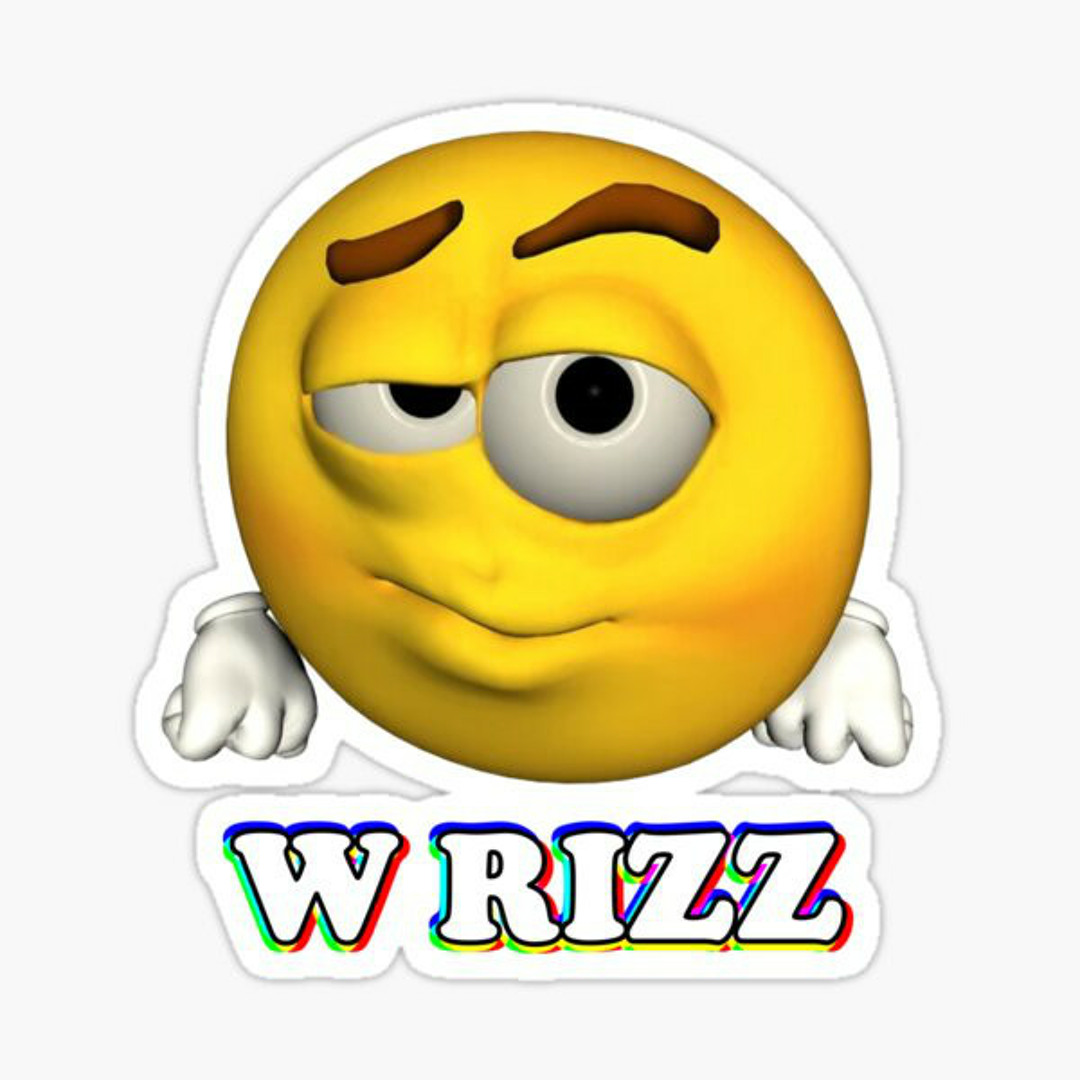
The pipeline ran from looksmaxxing forums in the late 2010s, to fitness and glow-up TikTok around 2023, to mainstream and classroom culture in 2024, by which point outlets were publishing explainers decoding the gesture for baffled parents and teachers. The pose mattered more than the science; most people using it treat the jaw claims as a joke rather than a regimen. Individual clips of kids ‘mewing’ at teachers or during interviews racked up millions of views and helped push ‘mewing’ onto year-end lists of Gen Alpha slang alongside ‘skibidi’ and ‘rizz.’
Notable examples and variations
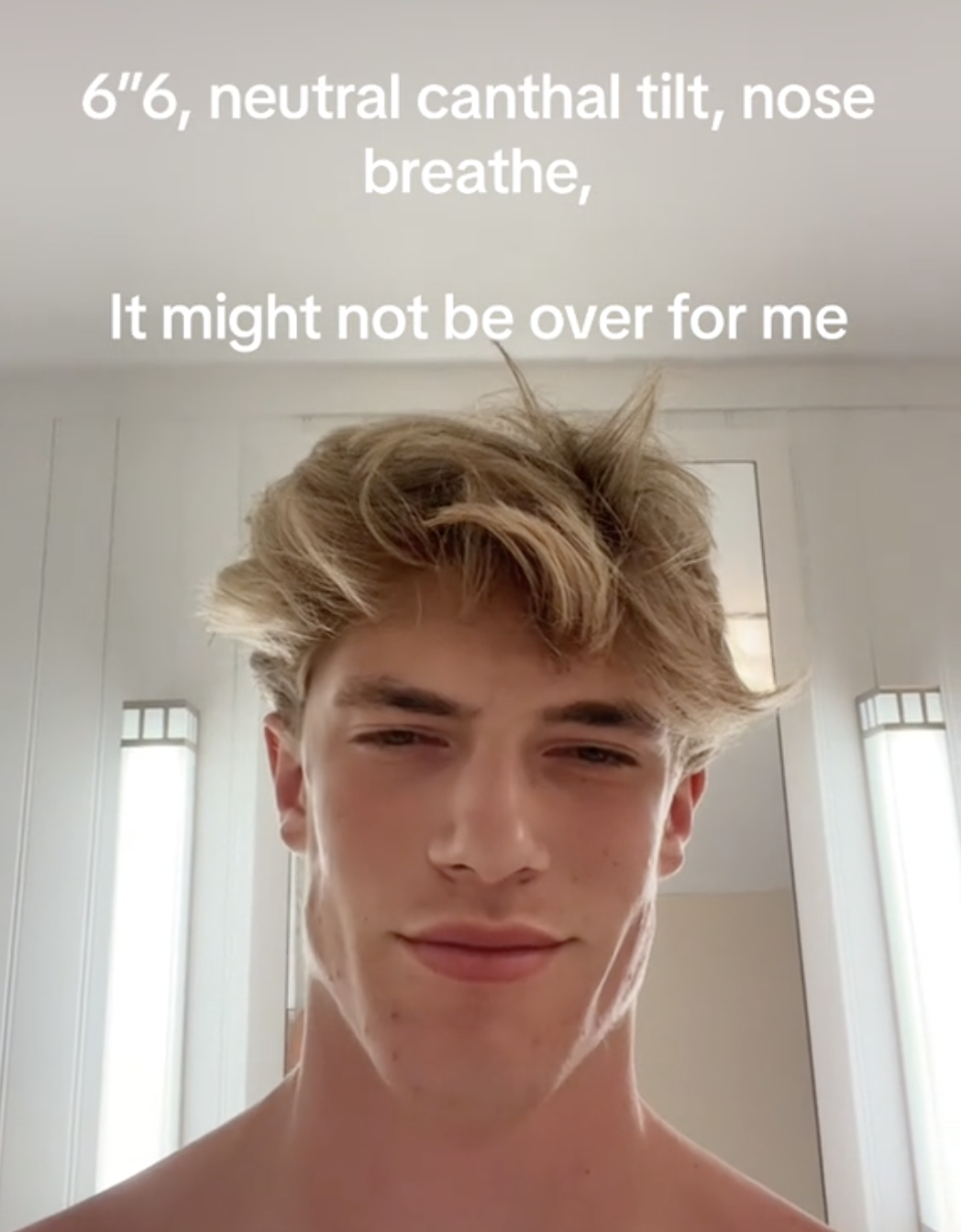
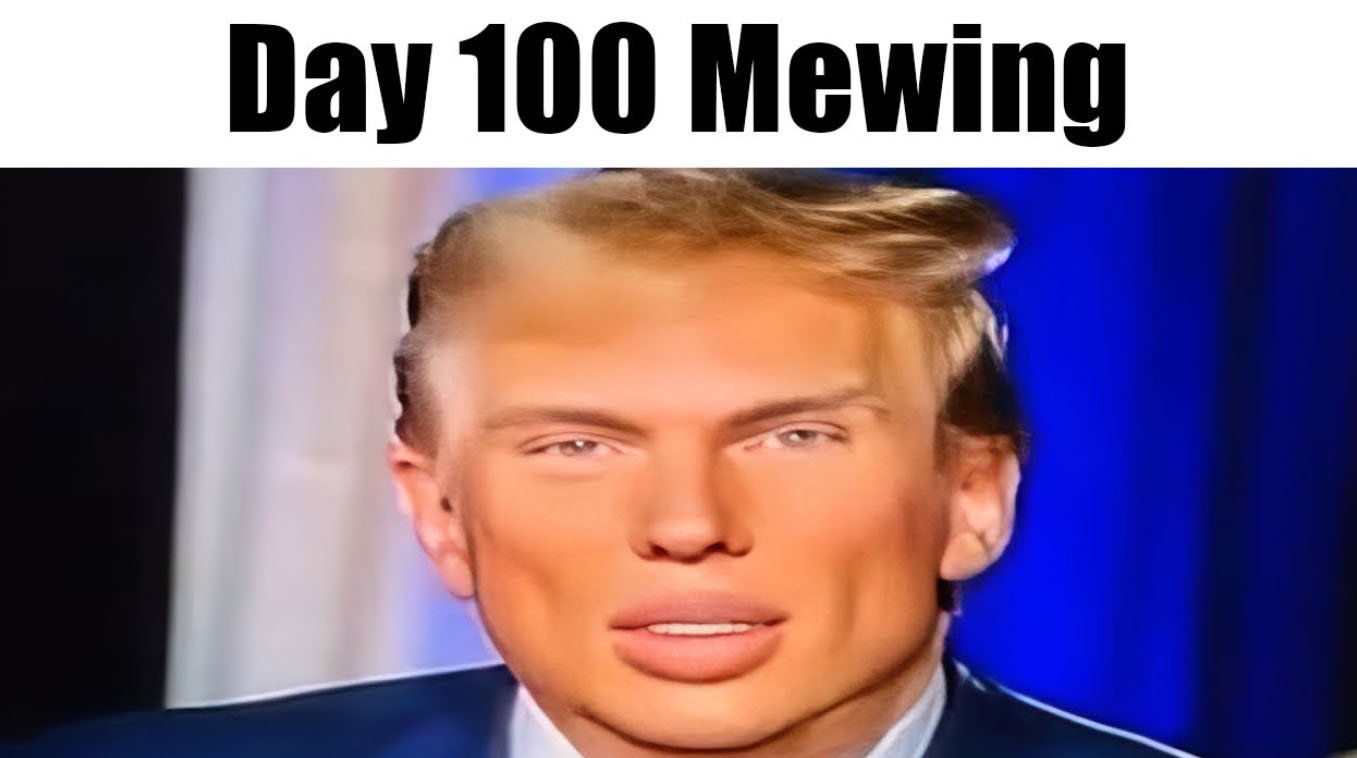
- ‘Day X mewing’ glow-up edits, in which a face is progressively morphed into an exaggeratedly chiseled version (the cover image is one of these).
- Classroom clips of students silently ‘mewing’ rather than answering a question.
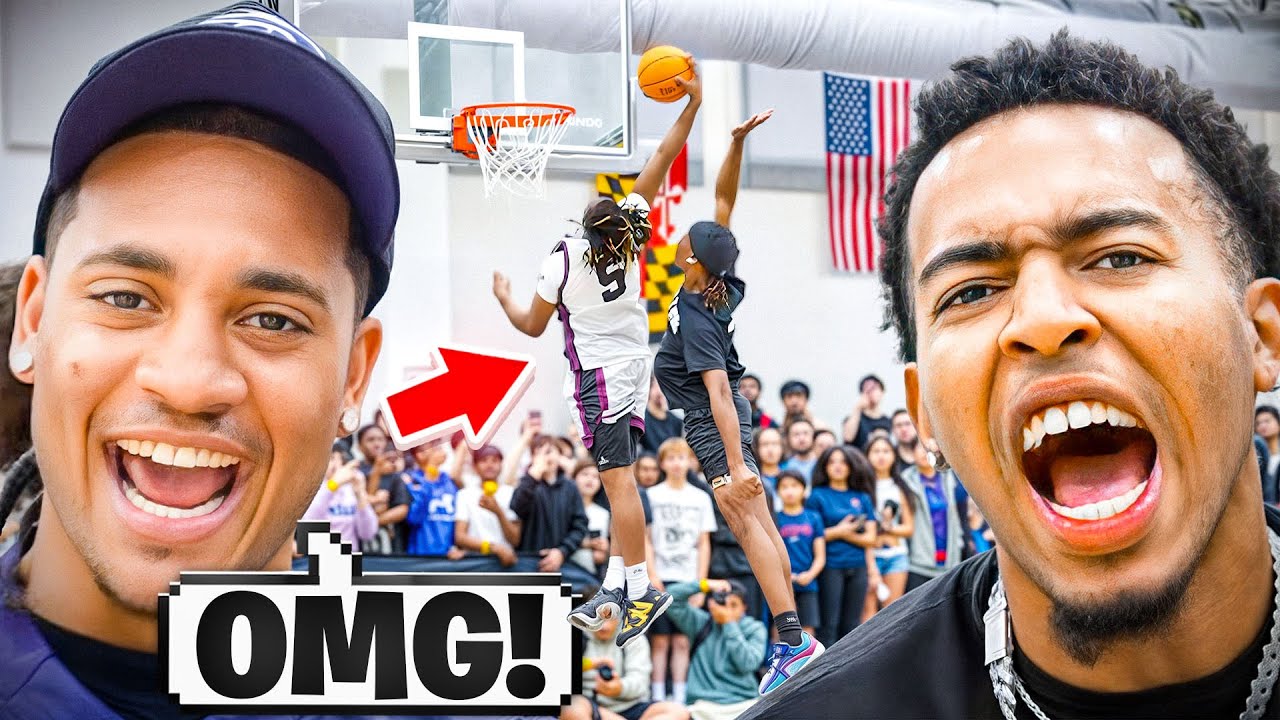
- Streamers and friends throwing up the mewing finger mid-conversation as a bit.
- Crossovers with looksmaxxing, mogging and ‘sigma’ content.
Legacy
Mewing is now one of the emblematic pieces of Gen Alpha ‘brainrot’ slang: a term that carries a real, and hotly contested, orthodontic claim but survives online almost entirely as an ironic gesture about looking good and staying quiet.
Examples & gallery
Frequently asked
What is mewing?
Resting the tongue on the roof of the mouth, promoted online as a way to sharpen the jawline; as a meme it became a gesture for staying silent and looking cool.
Does mewing actually work?
The dramatic face-reshaping claims are not supported by mainstream orthodontics, and its main proponents have been removed from the UK dental register; online it is mostly used ironically.
Where does the word come from?
It is named after British orthodontists John and Mike Mew and their 'orthotropics' philosophy, which spread through looksmaxxing forums before hitting TikTok around 2023.
What does the mewing gesture mean?
Raising a finger, going silent and tracing the jawline signals 'can't talk, I'm mewing' - a Gen Alpha gag for refusing to answer.
Sources
Embed this meme
Drop this on your site — it links back here.