PPAP (Pen-Pineapple-Apple-Pen)
Origin
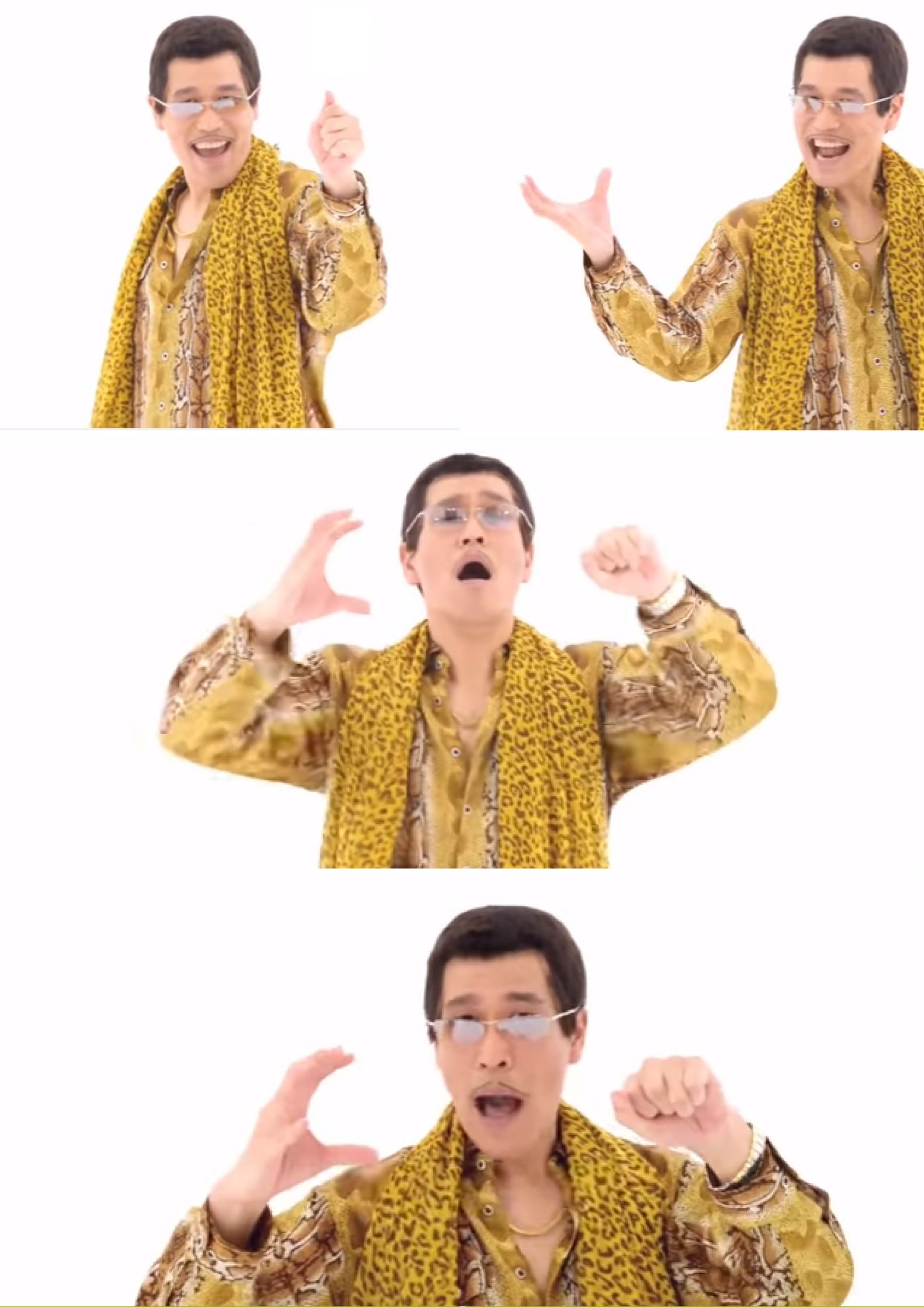
“PPAP (Pen-Pineapple-Apple-Pen)” is a 45-second music video uploaded to YouTube on August 25, 2016. It features Pikotaro — a fictional singer-songwriter played by the Japanese comedian Daimaou Kosaka (Kazuhito Kosaka) — in a leopard-print outfit and gold chain, performing a minimal dance while narrating the combination of a pen with two pieces of fruit.
That is the whole thing. He has a pen. He has an apple. He puts them together: apple-pen. He has a pen and a pineapple: pineapple-pen. Then he combines the two results into “pen-pineapple-apple-pen.” The song ends.
Kosaka has said the idea came from picking up a pen to write, thinking of the apple trees in his home town, and noticing an open can of pineapple on the table. The video reportedly cost around $1,000 to make.
What it means / how it’s used
PPAP is a pure earworm — a song with no message, no narrative, and a structure so simple it is impossible to misremember. Its appeal is entirely rhythmic and repetitive, and it functioned online as:
- A song to get stuck in other people’s heads deliberately.
- A dance to recreate, which requires almost no coordination.
- A structure to parody, substituting other objects.
- A reference to deploy when something is absurd but catchy.
Its brevity was decisive. At 45 seconds, watching it costs nothing, and sharing it carries no risk of wasting someone’s time — which is close to an ideal profile for a viral video.
How it spread
It was initially popular among Japanese students, then went global after Justin Bieber tweeted a link in September 2016, calling it his favourite video on the internet. That single post moved it from a regional curiosity to a worldwide phenomenon within days.
Its chart achievement is the most remarkable part. PPAP entered the US Billboard Hot 100 at number 77 in October 2016, making it — at 45 seconds — the shortest song ever to chart on the Hot 100. It took the record from a 1964 track that ran 1 minute 2 seconds.
Kosaka appeared on international television, performed the song at events including a United Nations-linked appearance, and the video accumulated hundreds of millions of views. He has also spoken candidly about how little of the money reached him.
Notable examples & variations
- Parody versions substituting other objects.
- Extended and remixed cuts, including an official longer version.
- Dance recreations and school performances.
- Officially licensed appearances and collaborations.
- The 2016 wave of “shortest song” chart coverage.
Legacy / cultural impact
PPAP is one of the defining viral videos of the 2010s and a landmark case of a non-English-language novelty reaching global saturation with no translation required — the words are almost entirely nouns everyone already knows.
Its chart record also marked a turning point that “Harlem Shake” had begun three years earlier: streaming data made it possible for something with no commercial ambitions, no label push, and a 45-second running time to appear on the same chart as the year’s biggest records.
Examples & gallery
Frequently asked
Who is Pikotaro?
A fictional singer-songwriter played by the Japanese comedian Daimaou Kosaka. He uploaded PPAP to YouTube on August 25, 2016.
How long is the song?
45 seconds. That made it the shortest song ever to enter the US Billboard Hot 100, where it debuted at number 77 in October 2016.
How did it go viral?
It was popular among Japanese students first, then Justin Bieber tweeted a link in September 2016 calling it his favourite video on the internet, which took it worldwide within days.
How much did it cost to make?
Reportedly around $1,000. Kosaka has said the idea came from picking up a pen while thinking about apple trees and noticing an open can of pineapple.
Sources
Embed this meme
Drop this on your site — it links back here.