Surreal Memes (Meme Man)
Origin
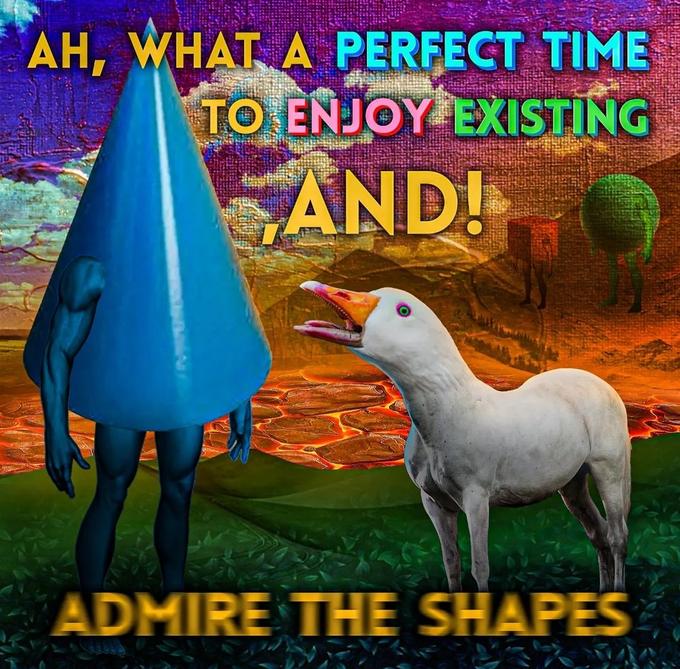
Surreal memes are a genre rather than a format: deliberately strange images built from crude 3D renders, warped perspective, impossible geometry, and text that reads like a corrupted translation. They are not trying to be funny in the ordinary sense. They are trying to be unsettling and slightly profound, and the humour comes from that ambition being pursued with completely inadequate tools.
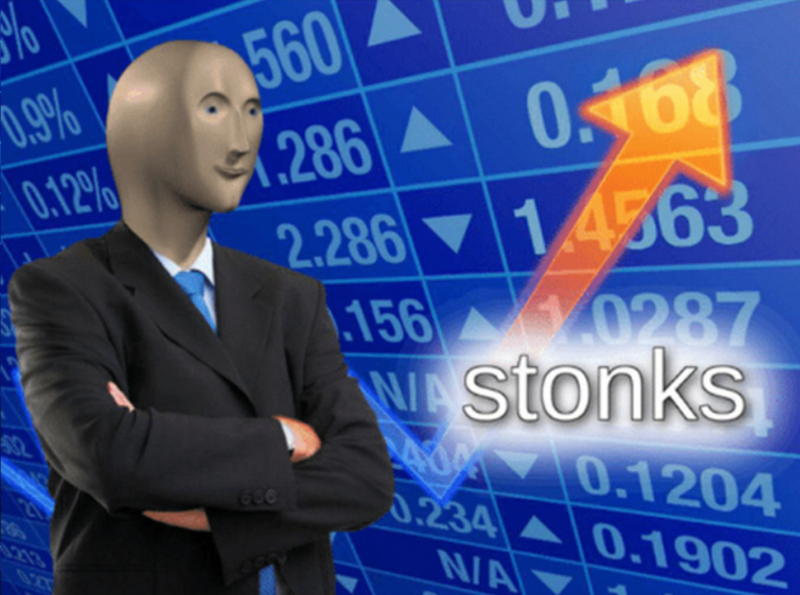
The genre’s mascot is Meme Man — a bald, featureless, low-polygon 3D head that originated on the Facebook page Special Meme Fresh. A comic posted on October 24, 2015, dealing with “layers of irony,” established him as a recurring character.
A second figure, Orang — an anthropomorphic orange — joined him, and the genre gradually accumulated a shared mythology involving dimensions, cosmic knowledge, and a loose pantheon.
What it means / how it’s used
Surreal memes operate on deliberate incomprehensibility. The typical image shows Meme Man in some impossible situation, captioned in broken, capitalised, misspelled text that gestures at profundity without delivering any.
The genre’s conventions:
- Intentional misspelling as a marker of tone.
- Low-effort 3D rendering treated as an aesthetic rather than a limitation.
- Cosmic or dimensional imagery — voids, grids, floating geometry.
- Captions that sound like translated philosophy.
- An internal mythology that fans elaborate collectively.
The point is that the joke is not extractable. A surreal meme cannot be explained, because there is nothing underneath the strangeness — the strangeness is the content.
How it spread
A dedicated subreddit launched in 2016 and grew fast: 3,000 followers by February 7, 2017, and 19,000 by April 25, 2017. An explainer video posted on April 18, 2017 took nearly 50,000 views within a week and brought the genre to a much wider audience.
Its most significant cultural export was not a surreal meme at all. Stonks — Meme Man in front of a rising stock chart — escaped the genre entirely in 2017 and became one of the most widely used memes on the internet, followed later by Panik / Kalm / Panik and Shef.
Most people who use those formats have never encountered a surreal meme and do not know the character has a name or a mythology.
Notable examples & variations
- The “layers of irony” comic that established Meme Man.
- Orang and the wider surreal pantheon.
- Stonks, Panik and Shef, the genre’s mainstream exports.
- Dimensional and cosmic imagery from the subreddit’s peak.
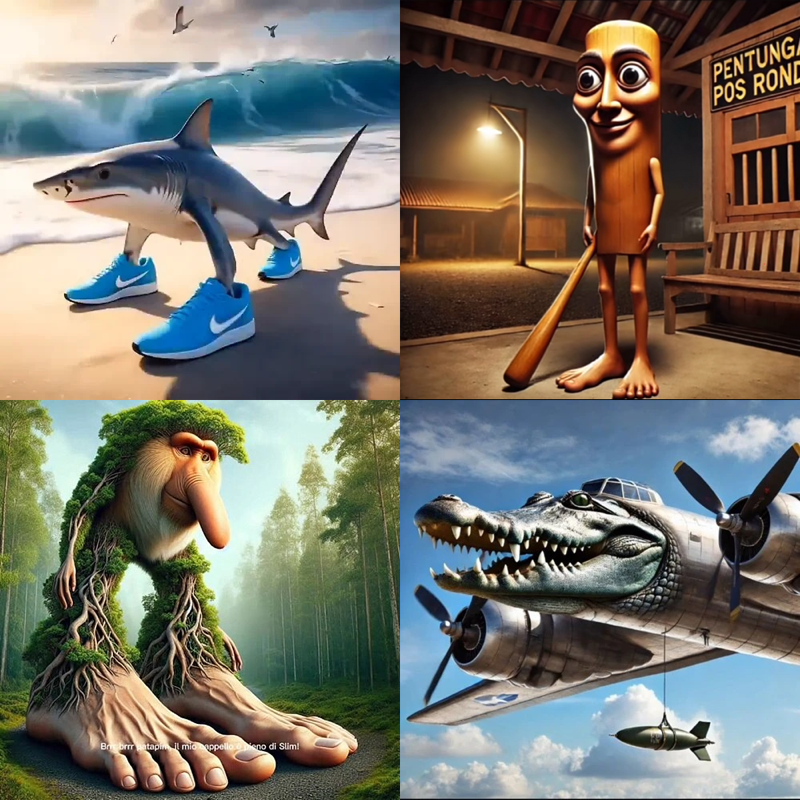
- Later brainrot formats that inherited the misspelling convention.
Legacy / cultural impact
Surreal memes represent the point at which internet humour became fully post-punchline. Earlier absurdist formats still had a joke somewhere in them; this genre removed it deliberately, and a substantial audience found the result funnier for it.
Its influence considerably outstrips its own popularity. The intentional-misspelling convention, the low-effort-3D aesthetic, and the general principle that a meme need not resolve into a joke all passed from surreal memes into the mainstream — and directly into the brainrot humour that followed a few years later.
Examples & gallery
Frequently asked
What are surreal memes?
A genre built on deliberately strange images — crude 3D renders, impossible geometry, and misspelled text that gestures at profundity. The joke is not extractable; the strangeness is the content.
Who is Meme Man?
The genre's mascot — a bald, featureless low-poly 3D head that originated on the Facebook page Special Meme Fresh, established as a character by an October 24, 2015 comic.
What did the genre produce?
Its biggest exports left the genre entirely: Stonks, Panik / Kalm / Panik, and Shef are all Meme Man formats used by people who have never seen a surreal meme.
Why does it matter?
It marked the point where internet humour became post-punchline, and its conventions — misspelling, low-effort 3D, no resolution — passed directly into later brainrot humour.
Sources
Embed this meme
Drop this on your site — it links back here.