Why You Always Lying
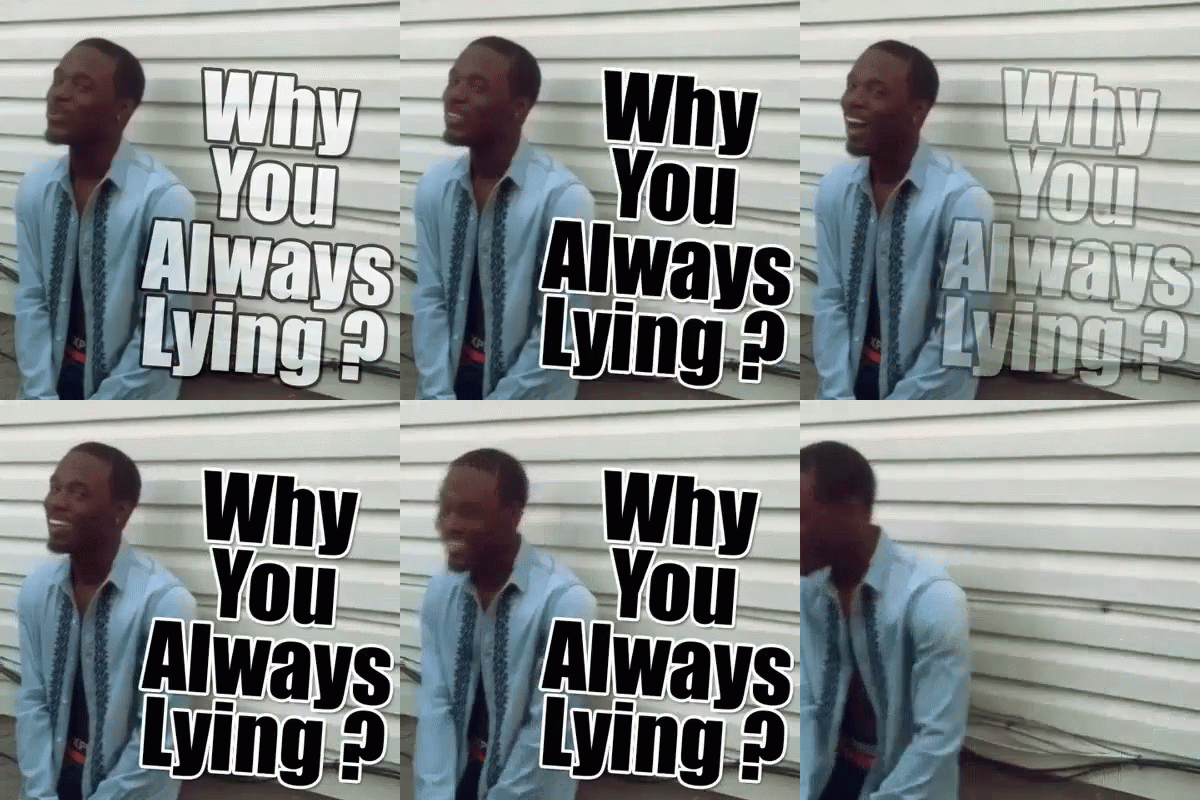
Origin
Nicholas Fraser made the video in a driveway in Queens, New York, and the whole thing took an afternoon.
On August 28, 2015, he heard the 1997 R&B single “Too Close” by the group Next playing, and improvised new words over the melody: why you always lying? He found the instrumental, wrote a full set of lyrics, got a haircut, put together a deliberately 1990s outfit, and had his brother film him performing it.
He uploaded it on August 29, 2015 to YouTube, Instagram and Twitter, then reposted a six-second cut to Vine — and that version is what detonated.
What it means / how it’s used
The song is used to catch someone in a lie. The setup is a clip or caption of somebody making an implausible claim, and the punchline is Fraser, dancing, singing the accusation directly at them.
Its uses:
- Calling out an obvious exaggeration.
- Responding to a boast nobody believes.
- Self-deprecating versions where the poster is the liar.
- Sound-only use in short-form video, cut in at the reveal.
The performance carries it. Fraser is not angry — he is delighted, dancing and grinning while making the accusation, which turns the format into teasing rather than confrontation.
How it spread
The Vine went viral immediately and spawned a large secondary ecosystem of remixes, parodies and recreations. The full video has since passed 30 million views.
The song was released commercially and charted, making Fraser one of a small number of Vine creators to convert a six-second clip into an actual record.
Fraser has continued making music and content in the decade since, and has spoken about the video repeatedly in interviews — including his own explanation for why it worked, which is difficult to improve on: everyone knows a liar, and everyone has lied.
Notable examples & variations
- The six-second Vine, the version most people saw.
- The full-length music video.
- Recreations and dance covers.
- Audio-only uses in short-form video.
- Text-only use of the phrase as a reply.
Legacy / cultural impact
“Why you always lying” is among the most successful things Vine ever produced, and one of the clearest demonstrations of what that platform was uniquely good at: a fully formed comic idea, performed properly, delivered in six seconds.
It also belongs to a pattern worth naming. A great many of Vine’s biggest exports were made by young Black creators whose work reached enormous audiences while the creators themselves remained comparatively unknown and largely uncompensated. Fraser is one of the few who managed to release the song commercially and keep his name attached to it.
The sampling matters to that story too. Building the joke on “Too Close” — a genuine 1997 R&B hit that a large part of his audience would recognise instantly — is what gave a fifteen-second driveway recording the polish of something professionally made. The costume, the haircut and the choice of instrumental were all deliberate, and the video’s apparent effortlessness is the result of decisions rather than luck.
Examples & gallery
Frequently asked
Who made "Why you always lying"?
Nicholas Fraser, filmed by his brother in a driveway in Queens, New York, and uploaded on August 29, 2015.
What song is it based on?
"Too Close," the 1997 R&B single by Next. Fraser improvised new words over the melody after hearing it the day before filming.
How viral did it get?
The Vine went viral immediately, spawned a large ecosystem of remixes, and the full video has since passed 30 million views. It was also released commercially and charted.
Why does the performance work?
Fraser is delighted rather than angry — dancing and grinning while making the accusation, which makes it teasing rather than confrontational.
Sources
Embed this meme
Drop this on your site — it links back here.