T-Pose
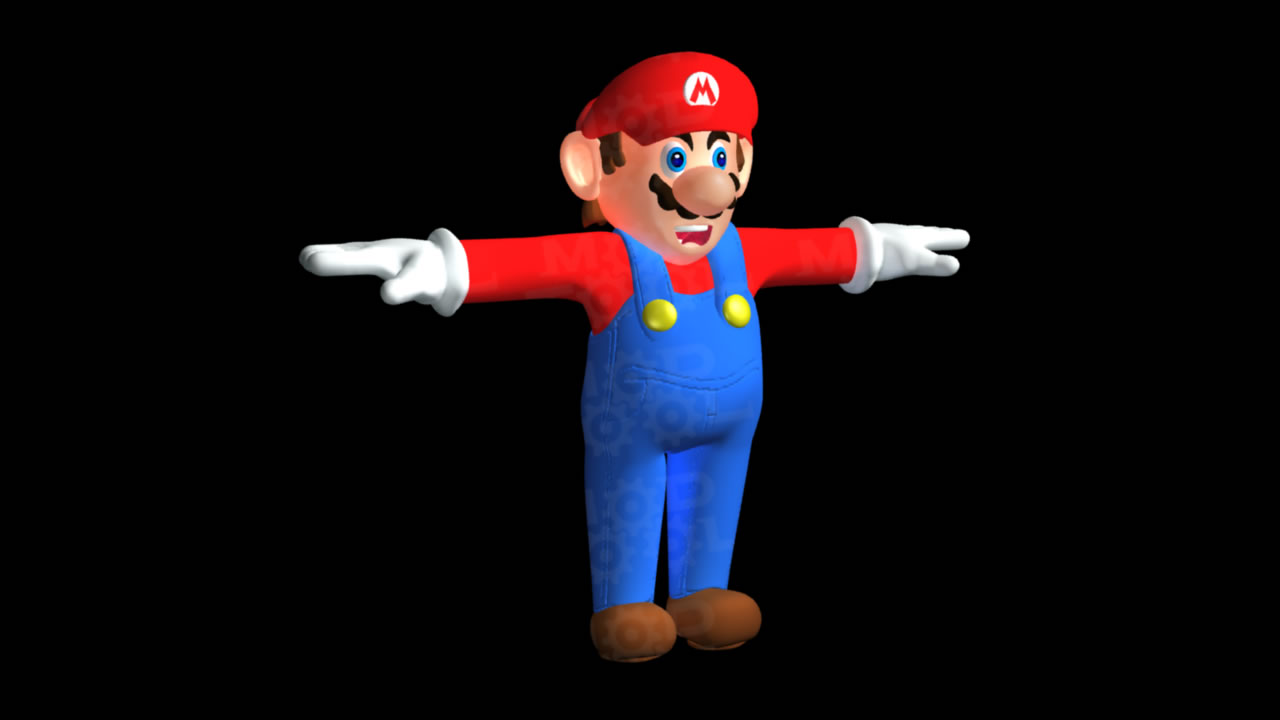
Origin
The T-pose is a technical artifact. In 3D animation, character models are built and rigged in a neutral reference pose — standing upright, legs together, arms extended straight out to either side, forming a T. This posture makes the skeleton easy to weight, the geometry easy to inspect, and the limbs easy to animate away from.
It is not meant to be seen. But when a game’s animation system fails — a state it does not recognise, a file that does not load — the model reverts to its default, and a character snaps rigidly into the T. Anyone who has played enough games has seen a character standing dead-eyed in a doorway with their arms out.
That glitch became the meme.
What it means / how it’s used
The T-pose is used as a gesture of absurd, unearned authority. Its defining caption — “T-posing to assert dominance” — frames the glitch as a deliberate display, as though the character has adopted the stance to intimidate everyone around them.
The phrase traces to a fabricated edit of a how-to article about improving your social standing at school, which circulated on Instagram before catching on more widely. The joke is the total mismatch: a rendering error presented as a power move.
Its uses:
- Edits inserting T-posing figures into photographs and footage.
- Real people recreating the pose in public.
- Game footage of genuine T-pose glitches.
- The phrase applied to any unearned display of confidence.
How it spread
The T-pose became an absurdist meme around 2016, circulating heavily in deep-fried and shitpost communities where deliberately degraded, low-effort images were the dominant style.
The “assert dominance” framing took hold through 2017 and 2018, sustained by a dedicated Reddit community devoted to the format that has existed since 2017. Through that period T-posing figures were photoshopped into landscapes, historical photographs, and film stills, and people began performing the pose in real life as a joke.
It has since become durable enough that games and films occasionally reference it deliberately — a rendering error that became recognisable enough to be used on purpose.
Notable examples & variations
- Photoshopped T-posers inserted into unrelated images.
- Genuine glitch footage from games.
- Real-world recreations in public spaces.
- Character-specific versions from particular franchises.
- The phrase used with no image at all.
Legacy / cultural impact
The T-pose is one of the clearest examples of a meme drawn from the machinery of media rather than its content. It is not a scene, a line, or a character — it is what a character looks like when the software fails, and the internet found that funnier than anything the software was supposed to produce.
It belongs alongside a small set of similar formats — texture-loading failures, physics glitches, broken collision — that treat software error as comedy. The T-pose is the most successful of them, and the only one to escape gaming entirely and become a gesture people perform with their actual arms.
Examples & gallery
Frequently asked
What is a T-pose?
The neutral reference pose used when building and rigging 3D character models — arms straight out to form a T. It makes the model easier to weight, inspect and animate.
Why do characters T-pose in games?
It is a glitch. When the animation system fails to load or recognise a state, the model reverts to its default reference pose.
Where does "T-posing to assert dominance" come from?
A fabricated edit of a how-to article about improving your social standing at school, which circulated on Instagram before spreading more widely in 2017–2018.
Why is it funny?
It presents a rendering error as a deliberate power move — the mismatch between a broken model and claimed authority is the whole joke.
Sources
Embed this meme
Drop this on your site — it links back here.