Two Books
Origin
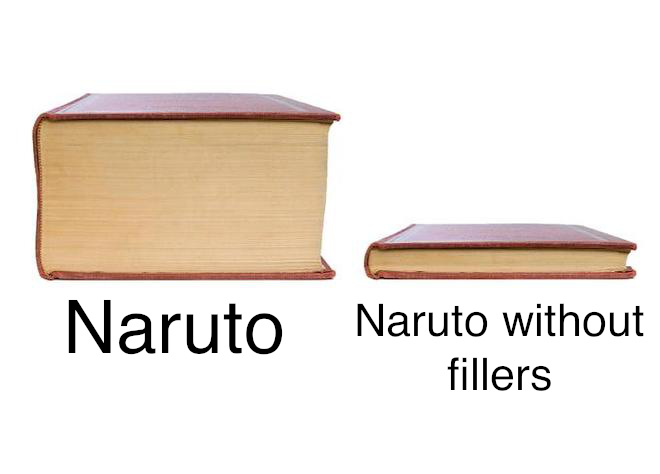
The template is a photograph of two books side by side: one enormously thick, one almost pamphlet-thin. Each gets a title label, and the comparison does the rest.
The format was established by a Reddit post on June 17, 2019, which used a Greek mythology framing — a huge volume against a tiny one — and circulated across r/memes and r/me_irl. Reposts and spin-offs went on to take hundreds of thousands of upvotes collectively.
The image itself is generic by design. There is no source scene, no character, and no context to decode: two objects, two labels, one obvious conclusion.
What it means / how it’s used
The joke is volume as argument. The thick book represents everything there is to say about one subject; the thin one represents how little there is to say about its counterpart. The comparison is always unflattering to whatever gets the thin book.
Standard constructions:
- A subject’s complicated version versus its simple one.
- Everything someone claims versus everything they can prove.
- A long list of a thing’s flaws versus its virtues.
- Self-deprecating versions where the thin book is the poster’s own achievements.
There is a common subversion in which both books are thick, used to argue that two supposedly unequal things are equally substantial — a reversal that only works because the format’s default expectation is so firmly established.
How it spread
The format’s rise was gradual rather than explosive, which is unusual and revealing. It has no punchline of its own; every joke has to be supplied entirely by the two labels, which means it spread through volume of use rather than through any single viral post.
That has given it unusual longevity. Most templates peak within weeks and then feel dated; Two Books has stayed in circulation for years because it never had a signature joke to wear out. It is closer to a piece of punctuation than a meme — a way of stating a comparison, available whenever a comparison needs stating.
It is particularly common in academic, history, and language communities, where the “everything we know about X versus everything we know about Y” structure describes a genuinely frequent situation.
Notable examples & variations
- Straightforward thick-versus-thin comparisons.
- Both-books-thick subversions.
- Three-book versions adding a middle option.
- Versions using real book titles for a factual comparison.
- Photographs of genuinely mismatched book pairs, used sincerely.
Legacy / cultural impact
Two Books belongs to a small class of contentless templates — formats with no source material, no character, and no inherent joke, whose entire function is to structure an argument. Weak vs. Strong Password and the various graph and chart memes belong to the same family.
These formats tend to outlast their more elaborate contemporaries precisely because they carry no cultural baggage. There is nothing to get tired of in a photograph of two books, which is why it is still being used years after the memes that were popular alongside it disappeared.
Examples & gallery
Frequently asked
What is the Two Books meme?
A photograph of two books side by side — one very thick, one very thin — each labelled, so the size difference makes the argument.
When did it start?
A Reddit post on June 17, 2019 using a Greek mythology comparison established the format, and reposts and spin-offs collectively took hundreds of thousands of upvotes.
What does the thin book mean?
It represents how little there is to say about its subject. The comparison is always unflattering to whatever is assigned the thin book.
Are there subversions?
Yes — a common variant makes both books thick, arguing that two supposedly unequal things are equally substantial.
Sources
Embed this meme
Drop this on your site — it links back here.