Baby Yoda (Grogu)
Origin
The character debuted on November 12, 2019, in the first episode of The Mandalorian, the flagship series launching Disney+. The episode ends with the title character discovering his bounty: a tiny, wide-eyed creature of the same species as Yoda, floating in a pram. It is fifty years old — infancy, for that species — and says nothing at all.
The reveal was kept genuinely secret. Disney withheld the character from all pre-release marketing and, unusually for the company, delayed merchandise entirely rather than risk spoiling it. That decision cost the studio a Christmas toy season and is widely regarded as having been worth it.
The character’s real name, Grogu, was not revealed until the episode “Chapter 13: The Jedi,” which aired on November 27, 2020. Reactions were mixed, and a large share of the internet simply carried on calling him Baby Yoda.
What it means / how it’s used
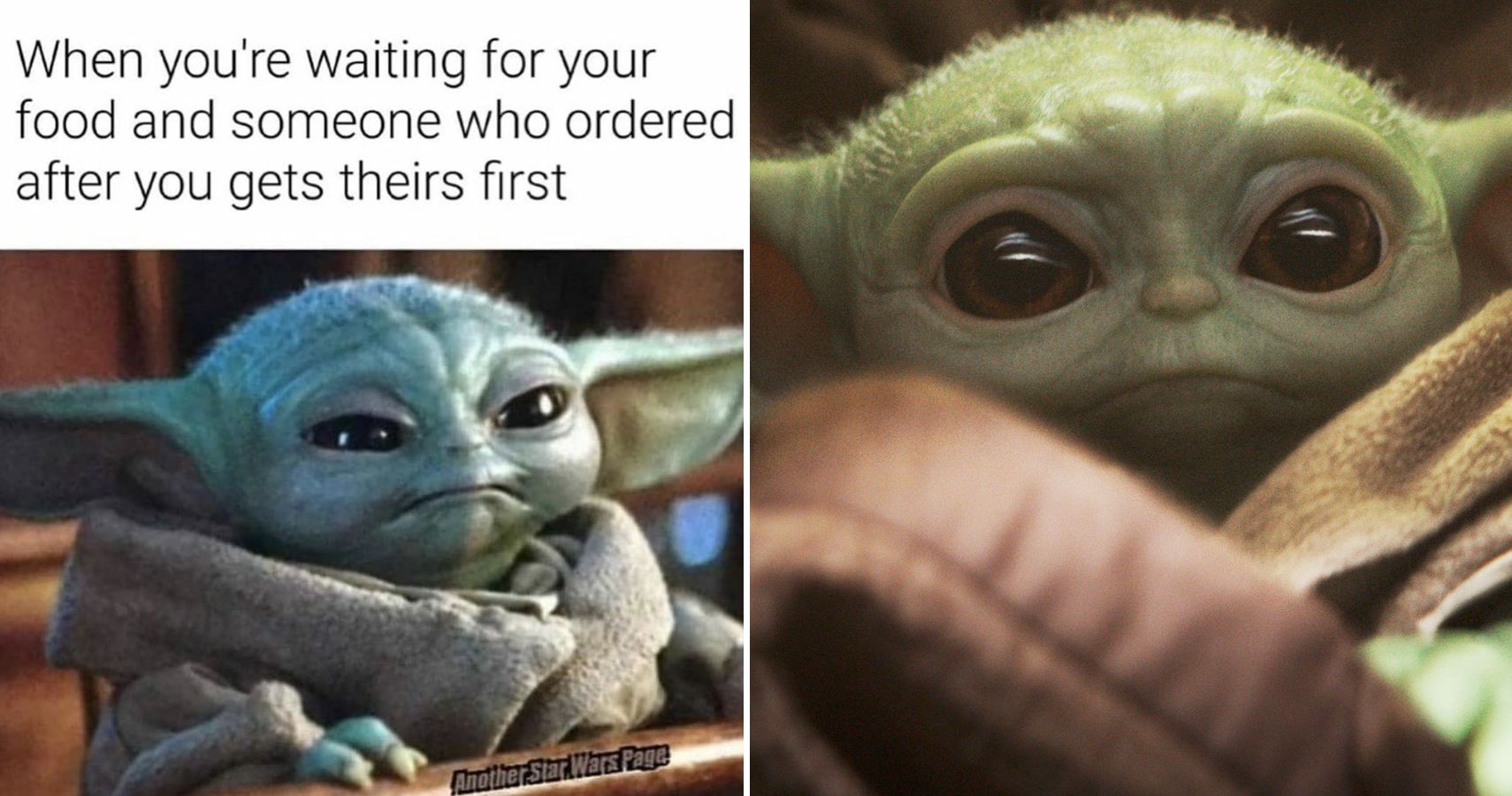
Baby Yoda became an instant wholesome reaction icon, used for:
- Uncomplicated cuteness.
- Wanting something, expressed without words.
- Comfort, softness, and small pleasures.
- Protectiveness — a large volume of early posts were pledges to defend him.
That protectiveness is a defining feature. Within days of the premiere, the dominant register of Baby Yoda posting was not look how cute but nothing may happen to him — a tone captured by early viral posts declaring readiness to fight on his behalf.
How it spread
The reaction was immediate and enormous. Posts appeared within hours of the episode, one taking over 9,000 likes within two days, and by November 20, 2019 — barely a week after the premiere — meme aggregators were publishing dedicated Baby Yoda collections.
He dominated the internet through the winter of 2019–20, generating thousands of individual image macros and reaction formats, including Baby Yoda drinking soup, which became a standalone meme in its own right.
The absence of merchandise, paradoxically, accelerated it. With nothing official to buy, people made their own: fan art, knitted toys, 3D prints, and edits filled a gap that Disney had deliberately left open, and the character spread through creation rather than consumption.
Notable examples & variations
- Reaction macros expressing want, comfort, or cuteness.
- The soup-sipping format, which became independently famous.
- Protective “I will throw hands” declarations.
- Fan-made toys and art produced during the merchandise gap.
- Grogu-versus-Baby-Yoda naming jokes after the 2020 reveal.
Legacy / cultural impact
Baby Yoda is the clearest modern example of a character engineered for internet transmission — big eyes, small body, no dialogue, no complicating personality — and of a studio correctly identifying that secrecy would be worth more than a merchandise line.
He also marked a shift in how streaming shows generate culture. The Mandalorian released weekly rather than all at once, and the character’s meme dominance was sustained across months rather than burning out in a weekend — a schedule Disney+ and its competitors have used deliberately ever since.
Examples & gallery
Frequently asked
Who is Baby Yoda?
Grogu, a fifty-year-old infant of the same species as Yoda, introduced at the end of the first episode of The Mandalorian on November 12, 2019.
When was his real name revealed?
In "Chapter 13: The Jedi," which aired November 27, 2020. Many people kept calling him Baby Yoda regardless.
Why was there no merchandise at launch?
Disney deliberately withheld all merchandise and marketing to protect the reveal, giving up a Christmas toy season in the process.
Why did he take over the internet so fast?
The design is engineered for transmission — big eyes, small body, no dialogue — and the merchandise gap pushed fans to make their own art, toys, and edits instead.
Sources
Embed this meme
Drop this on your site — it links back here.