OK Boomer
Origin
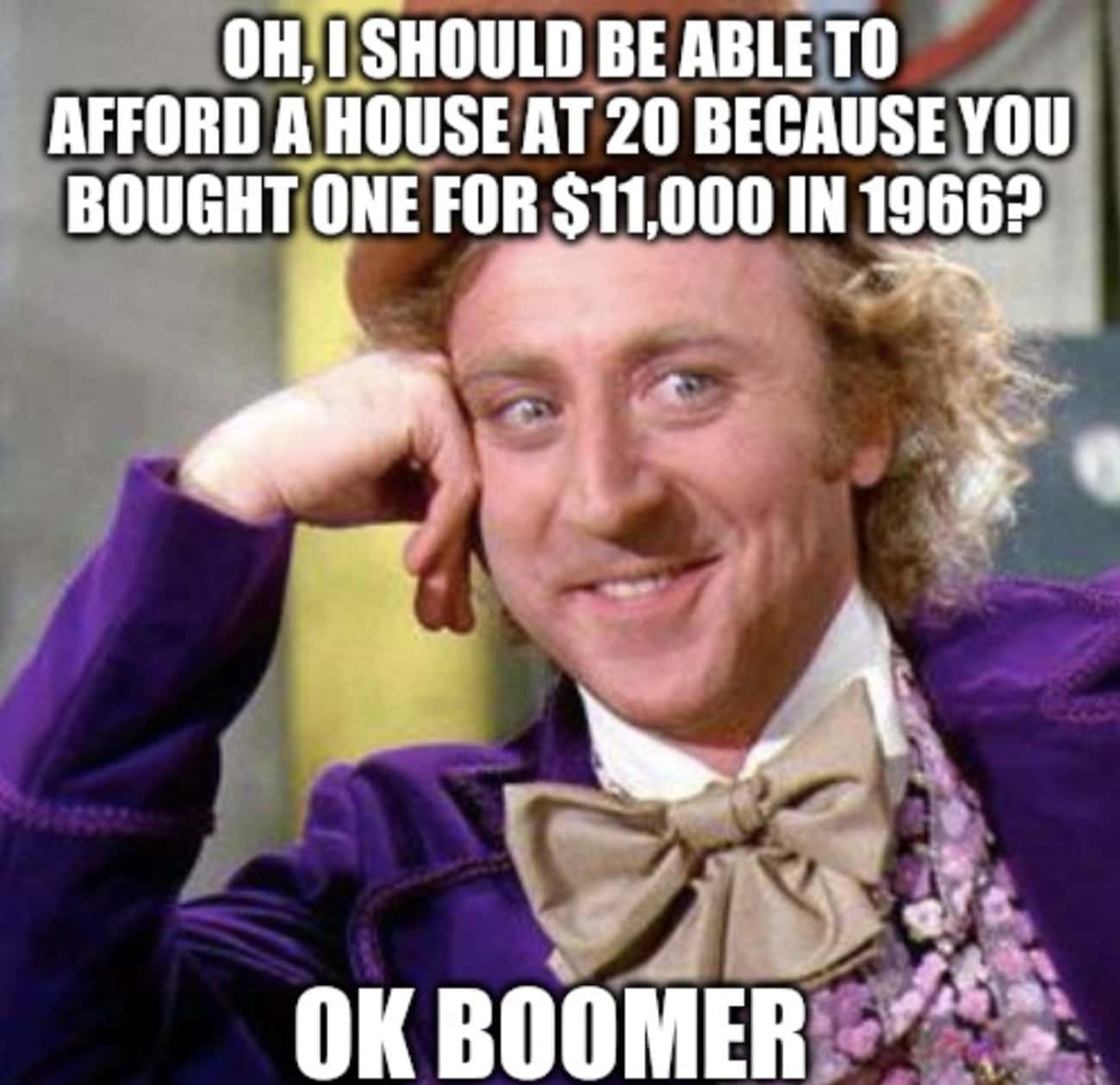
“OK boomer” is a two-word dismissal aimed at attitudes the speaker considers out of touch — a refusal to argue rather than a counter-argument. “Boomer” refers to the baby boomer generation, but in practice the phrase is aimed at a posture rather than an age group.
Its documented history starts earlier than most people assume: the phrase appears in a 4chan post from September 3, 2015. It stayed obscure for years. The first real traction came in January 2019, when an ironic Doge image captioned “OK BOOMER” began circulating on Twitter as a reaction image.
What it means / how it’s used
The phrase is a conversation terminator. Its function is to signal that the speaker considers a remark not worth engaging with — dismissing the frame rather than the content. That is what made it effective and also what made it contentious: there is no version of “OK boomer” that invites a reply.
It is used to wave away condescension about young people’s work ethic, spending, technology use, or politics, and — very often — self-deprecatingly, by people applying it to their own outdated opinions.
How it spread
The catchphrase became a phenomenon in late 2019, driven by TikTok. Several musicians produced short “OK boomer” tracks; the most widely used, by Peter Kuli, took 294,000 SoundCloud listens in a month and 797,000 Spotify streams, and by November 2019 the sound had been used in over 30,600 TikTok posts.
Mainstream coverage followed almost immediately. On October 29, 2019, The New York Times published a feature declaring the phrase marked the end of friendly generational relations, which — as often happens — introduced it to a far larger audience than the platform it started on.
Its most-reported single use came on November 4, 2019, when a New Zealand MP deployed it in parliament in response to an interjection during a climate debate, delivering the line without pausing her speech. Footage of the moment circulated worldwide.
The phrase’s commercial phase arrived just as fast: multiple parties filed trademark applications covering merchandise and media, and “OK boomer” merchandise appeared within weeks — a cycle that has become standard for any catchphrase that reaches this level of visibility.
Notable examples & variations
- Text-only replies, by far the most common use.
- TikTok videos set to the various “OK boomer” tracks.
- The ironic Doge macro that carried the phrase in early 2019.
- Self-applied uses about one’s own outdated opinions.
- Reversed constructions like “OK zoomer,” which appeared almost immediately.
Legacy / cultural impact
“OK boomer” is one of the clearest examples of TikTok’s arrival as a meme engine. Before late 2019, most catchphrases reached the mainstream via Twitter or Reddit; this one arrived through short-form video and audio, and the pattern it established — a sound, a trend, then press coverage — became the standard route for everything after it.
The phrase itself has cooled into an ordinary piece of slang, used more often as a joke than a jab. Its lasting significance is less about generational conflict than about how quickly a two-word phrase could go from an imageboard post to a parliamentary transcript.
Examples & gallery
Frequently asked
What does "OK boomer" mean?
It is a dismissal aimed at attitudes the speaker considers out of touch — a refusal to engage rather than a counter-argument.
Where did it come from?
The phrase appears in a 4chan post from September 3, 2015, but stayed obscure until an ironic Doge macro captioned "OK BOOMER" spread on Twitter in January 2019.
How did it go viral?
Through TikTok in late 2019. Peter Kuli's "OK boomer" track took 294,000 SoundCloud listens in a month, and the sound was used in over 30,600 TikTok posts by that November.
What was its most famous use?
On November 4, 2019, a New Zealand MP used the line in parliament in response to an interjection during a climate debate, and footage circulated worldwide.
Sources
Embed this meme
Drop this on your site — it links back here.